about
Sustainability is usually a conversation about the planet. Mirror is about the people on it. While environmental issues dominate the headlines, the social dimension — fairness, equality, whether everyone actually gets a fair shot — tends to slip out of frame. A society isn't sustainable just because it's green. It's sustainable when it's also just. Mirror is a campaign built to bring that overlooked half of the picture back into focus, using generative visuals and real societal data to make the abstract feel immediate.
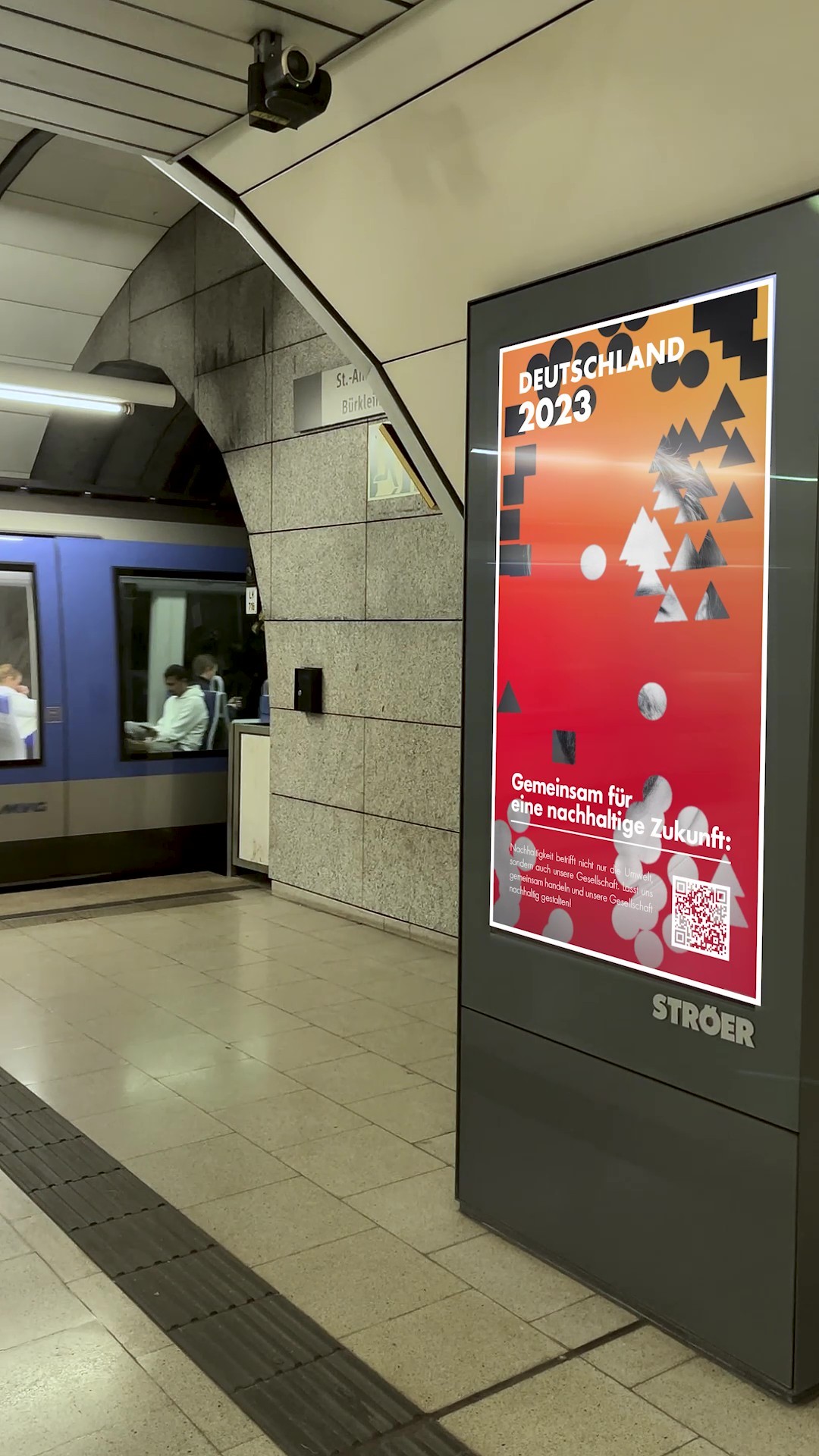
The core idea is simple: turn data into something you feel before you understand it. At the heart of the campaign is a generative animation that translates societal metrics into a living visual language — one that speaks to instinct rather than intellect. Where there's inequality and injustice, the animation grows tense and restless, and you sense the imbalance in your body before you can name it. Where a society is equal and cohesive, it settles into harmony. The statistics never change, but the way they land does.
Four data-driven behaviors shape what you see. Diversity is expressed through the variety of shapes — drawn from data on ethnicity, language, and migration, so a diverse society reads as a field of distinct forms, while a homogeneous one flattens into sameness. Movement is driven by income and educational equality, using indicators like the pay gap and PISA scores; high equality produces coordinated, harmonious motion, while inequality scatters the shapes into chaotic, isolated paths. Tension works through attraction and repulsion, mapped to peace and crime indices — cohesion pulls the shapes together, unrest drives them apart. Each behavior is a metaphor you don't have to decode; you just recognize it.
Alongside the animation, a series of portraits puts human faces to the same data. Generated with Adobe Firefly and built on a database reflecting a community's cultural and social makeup, the portraits visualize how varied — or uniform — a society really is. They're less a conclusion than a prompt: an invitation to think critically about identity, representation, and what an inclusive society actually asks of us.
Mirror is, ultimately, a reminder. A fair and just society isn't a nice-to-have alongside a sustainable future — it's a precondition for one. By making that idea legible through design rather than argument, the campaign asks its audience to see social sustainability not as a footnote to the climate conversation, but as inseparable from it.
credits